
How to measure nonwoven samples
How to measure nonwoven samples with POROLUX™
Nonwoven materials can be tricky to measure, especially when consistency and accuracy really matter.
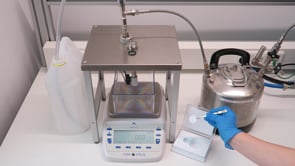
This short video gives you a clean, real‑lab demonstration of how to get trustworthy pore size results with a POROLUX™ porometer.
Whether you're in R&D, QC, or evaluating new testing equipment, this guide shows you exactly how simple and effective the process can be.
Watch the video below to see the workflow from start to finish.
What you can take away from this video
See how to cut and prepare nonwovens so they sit flat and seal properly.
Learn how to get the right wetting level — not too little, not too much.
Understand what makes a good seal for fluffy or compressible materials.
Avoid measurement issues caused by wrinkles or trapped air.
Get confident with the overall POROLUX™ workflow for flexible materials.
This guide is ideal for filtration media, hygiene materials, medical nonwovens, and any application where pore size matters.
Fast overview of the workflow
Step 1: Prepare your nonwoven
A clean cut helps the sample seal evenly.
Step 2: Apply the wetting liquid
Consistency matters more than volume.
Step 3: Mount the sample
The video shows how to flatten soft materials without compressing them too much.
Step 4: Start your method
Just choose your settings and hit start.
Step 5: Check the results
FBP, MPD, and distribution curves give a clear picture of your material.
Why pore size testing of nonwovens matters
Pore size directly influences performance — from filtration efficiency and flow rate to batch‑to‑batch consistency. POROLUX™ porometers help you validate raw materials, optimize production, and ensure your nonwoven products meet the specifications your customers expect.
Porometry is fast, clean, and precise — without complicated sample prep or destructive testing.
Extra resources for even better results
Sample preparation guide for porometry
Poroliquid preparation help
These resources help you improve testing consistency and understand the science behind your results.